Our house needs an electrical inspection soon. Several electricians came to see it. Each time, they looked at the cabinet and left. Some said they would send a quote. None of them did.
So it is up to me. I am going to learn.
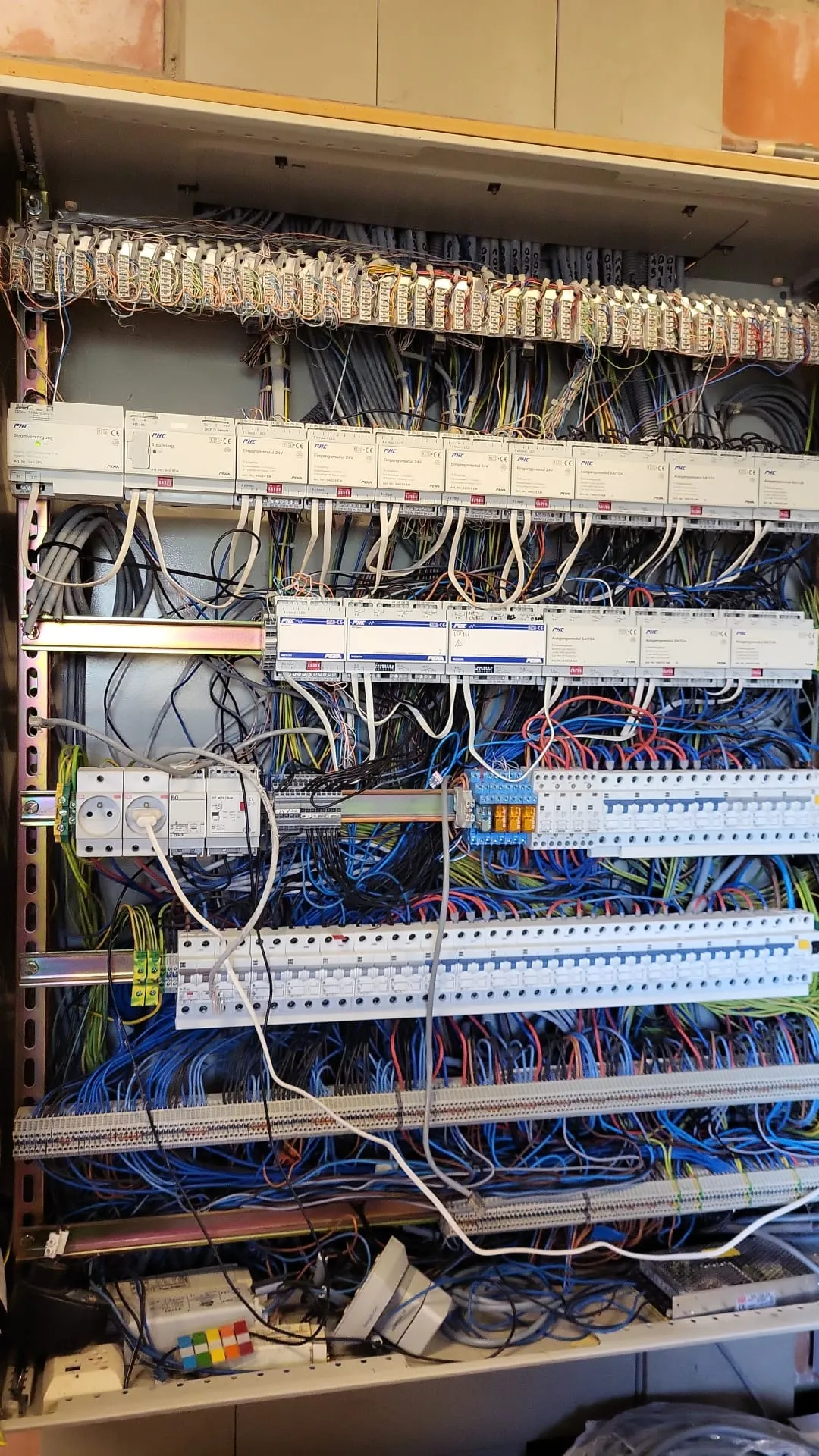
What I have at home
The house has a home automation system from about twenty years ago. The brand is PHC, and nobody maintains it anymore.
Every room has a panel with four or five push buttons. Thin cables, a bit like Ethernet cables, go from each panel to the cabinet. It is not a normal fuse box. It is a big cabinet full of wires.
Then we moved the kitchen. The new one is in an unfinished room at the back of the house, and the old kitchen became an extra bedroom. We knocked down a wall and removed the kitchen cables ourselves. An electrician came to connect the new ones. But there is no light switch on the kitchen side.
For now, I found a workaround. I connected the new LED lights to push buttons that already existed.
The kitchen needs two more switches. But to add them, I would have to reprogram almost the whole house. And I have no plan of the installation. Not on paper, not on a computer.
Keep the home automation, or remove it?
I don’t know yet. I see two options:
- replace the old system with a modern home automation;
- remove it and rewire the house with simple switches.
Both options mean new cables, at least for the switches. And both would cost a lot if I paid someone to do it. I need to study both before I choose.
How I will learn
I know nothing about electricity yet. It interests me, but it is a big field. It will take time.
I will start with a good YouTube playlist or a website for the basics. I also want to see how much AI can help. I can share photos of the real wiring, ask it to draw diagrams, and use it to understand what is there and what I could change.
I track the courses I follow, and how far I have got, on learn.mehmetcinar.com.
Like a developer
The house is like a legacy codebase nobody wants to maintain. So I will work on it like a developer:
- understand what exists and how it works;
- find what is broken;
- list every circuit;
- write everything down;
- plan the changes.
What’s next
First, I learn the basics. I won’t touch anything before that. Then I will map the installation: which button turns on which light, and where each cable goes.
I don’t know how fast it will go. I will write about it step by step.